Jinwar: Where Women Rebuild the Future
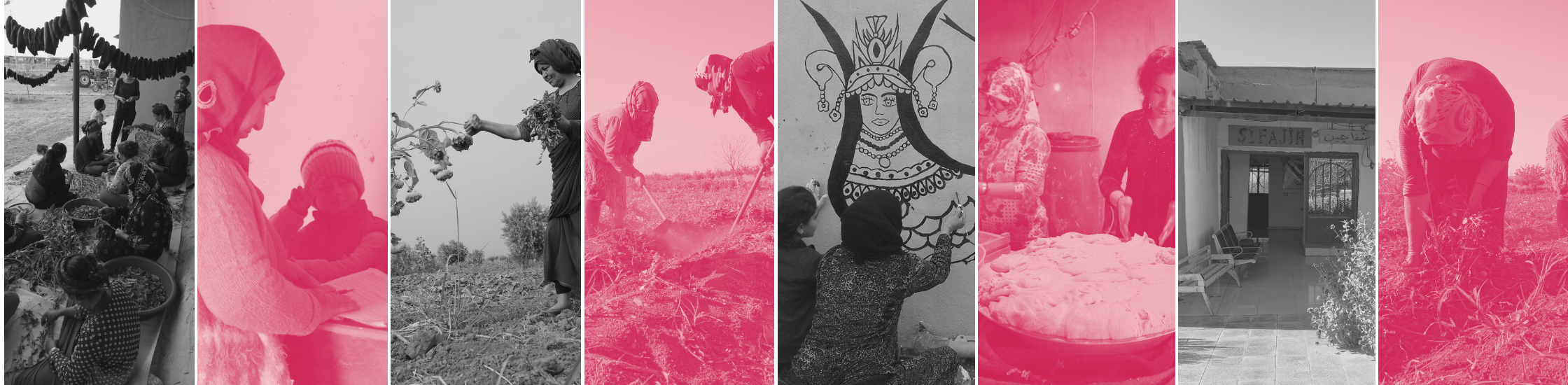
Bîrgul for The Jiyan Archives, sat in written correspondence with Yasmîn, who arrived in Jinwar six years ago with her daughter, and exchanged images with Hevî, who offered a visual glimpse into life inside the village. Together, their words and photographs open a window into Jinwar as a lived, evolving space of women’s collective life, where survival, not personal archive-making, remains at the centre of everyday existence.
A New Life in Rojava
Yasmîn came to Jinwar six years ago with her daughter and, as she puts it, the need to rebuild not just a life, but herself. Moving in with her daughter, Jinwar became a defiant sanctuary for her-a haven of women and children standing firm against the brutality of jihadist militants, the entrenched structures of patriarchal violence, and the shadow of Turkish occupation looming over her hometown, Efrîn. With construction beginning in 2017, Jinwar, from the Kurdish jin (woman) and war (land or habitat), meaning ‘land of women’, is a village physically built by women seeking refuge from the devastation of ISIS, displacement, and systemic patriarchal violence. It serves as a communal sanctuary where women and children foster a life rooted in the principles of communalism, solidarity, ecological sustainability and mutual aid. 'My move here was not merely a change of location,' Yasmîn says. 'It marked the beginning of rebuilding my life and rediscovering myself.' She arrived six years ago with her daughter, and Jinwar has been transforming her ever since.
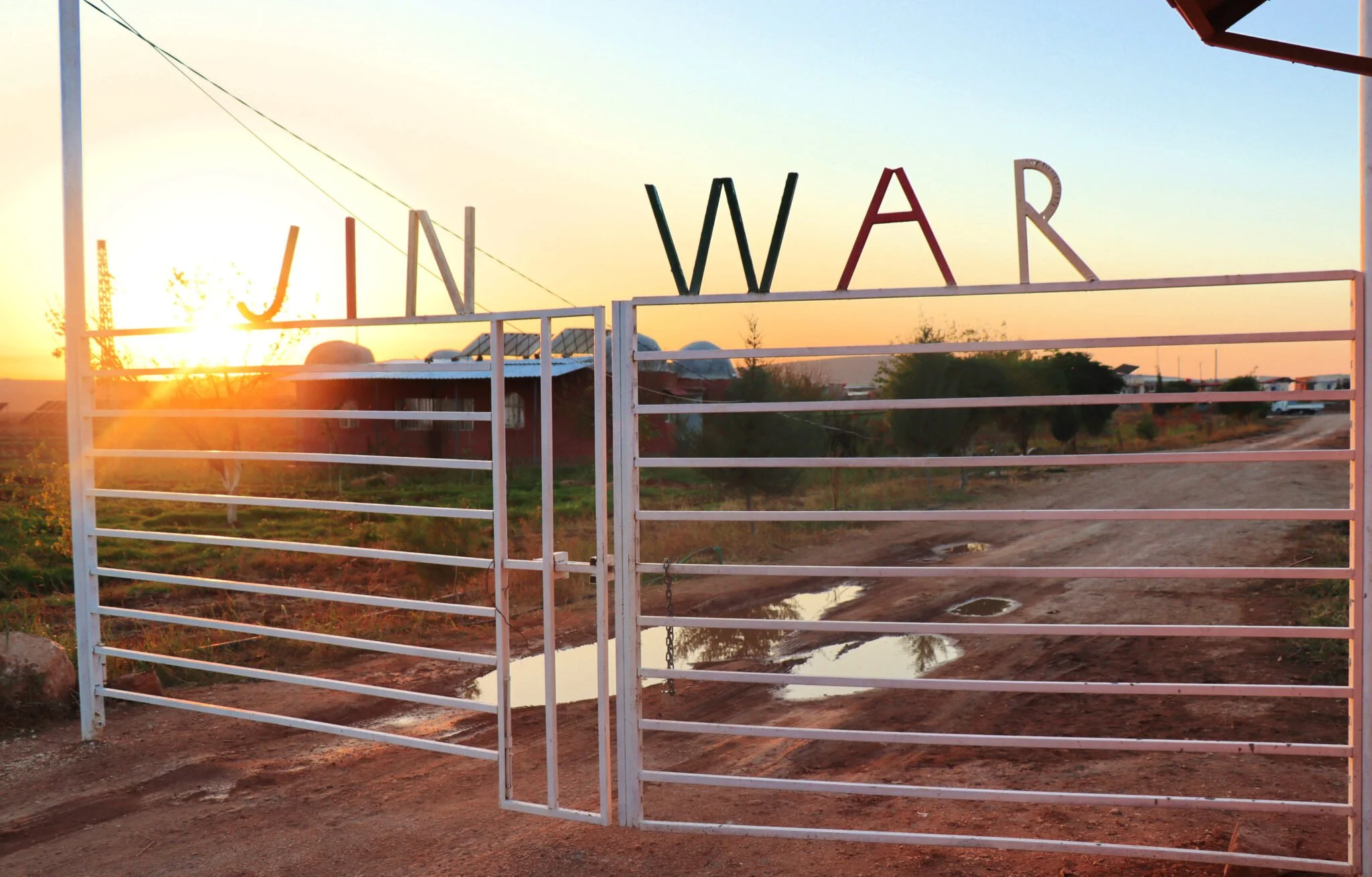
The gates of the women’s village in Rojava. Photo/Jinwar
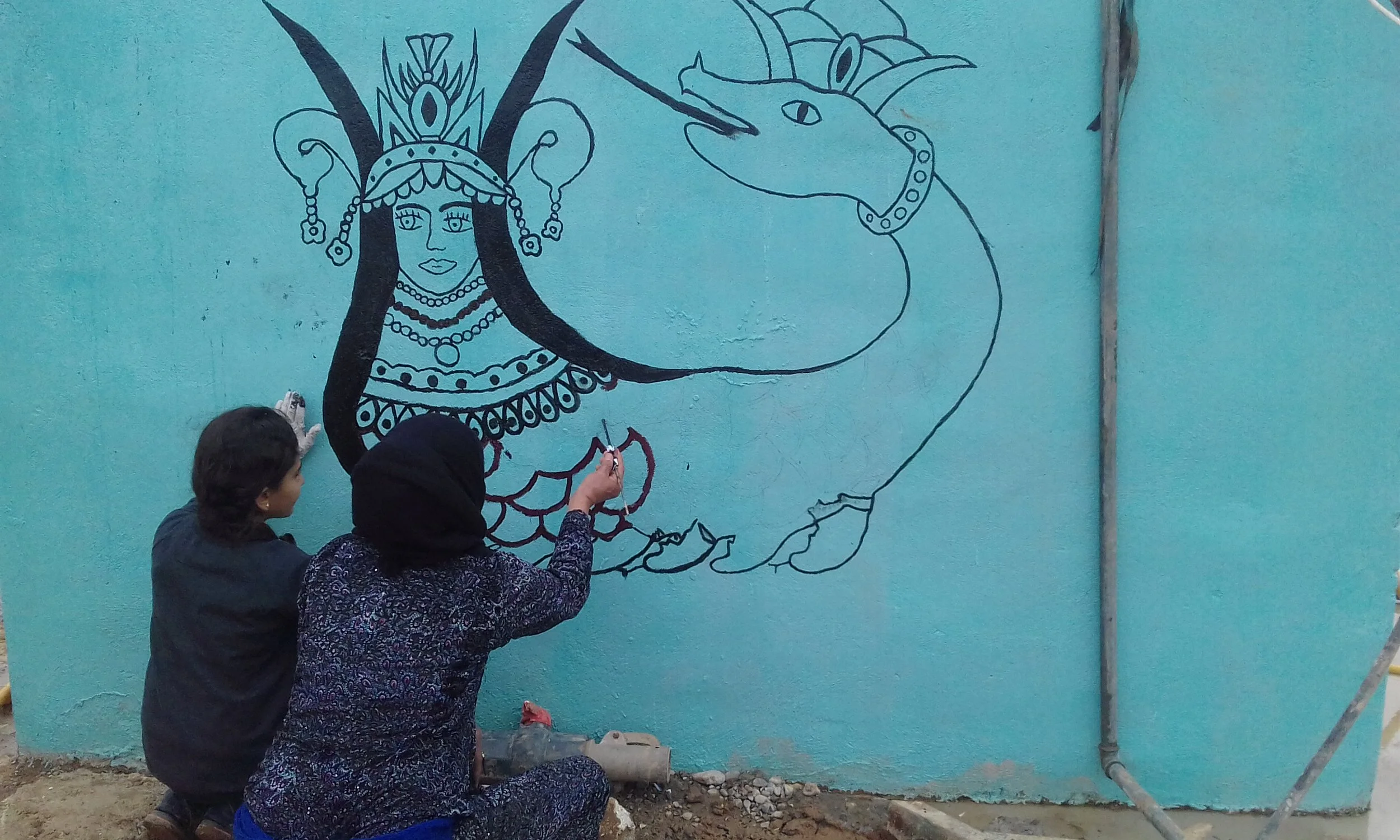
Two young girls of Jinwar paint the Kurdish female legend of Shahmaran onto the village walls. Photo/Jinwar
Communal Life Through Solidarity
"We start our mornings with tea and coffee shared with the mothers," Yasmin says. "Then, tasks are assigned according to the plan, and everyone gets to work. “Throughout the day, we carry out many tasks together, from welcoming guests and resolving issues within the village to addressing women's needs and engaging in production." She further explains that this planning process is inclusive: “This planning isn’t limited to adults alone; the children’s representative and the youth representative also participate in these meetings. This way, everyone has a say, and everyone becomes an integral part of community life.” Through these practices, Yasmîn highlights the deep communal solidarity present in Jinwar, erasing the hierarchies enforced on society by patriarchal traditions. In Jinwar, this communal spirit reaches into every corner of life; from the physical construction of their homes to the seasonal harvest, every facet of daily existence is self-managed and sustained by the women themselves. They participate in women’s councils, while youth and children have their own communes where they learn to express themselves and act collectively. Dominant masculinity has long worked to sever women from themselves, shrinking their lives to the walls of a house, their worth to their usefulness. In Jinwar, that logic is refused at every level. Here, women organise, govern, and build. By refusing this alienation from nature and rejecting the role of being mere tools for men, they strive toward a democratic society and aim to spread this consciousness far and wide. As Yasmin puts it: 'As I changed, the people around me changed as well; this transformation spread in waves. The relationships we’ve built with neighbouring villages are expanding through the awareness of children and women. This way of life transcends its boundaries to inspire other communities as well.' Serving as the village spokesperson and managing its finances, Yasmîn finds her daily life intense yet profoundly meaningful. She embodies the type of woman Jinwar aims to uncover. As she reflects: 'I began to get to know myself. I discovered a strength I hadn’t been aware of before. My sense of responsibility grew, and I became more compassionate. Here, I learned what labour truly means; I saw that labour is not just about producing, but about building a life.'
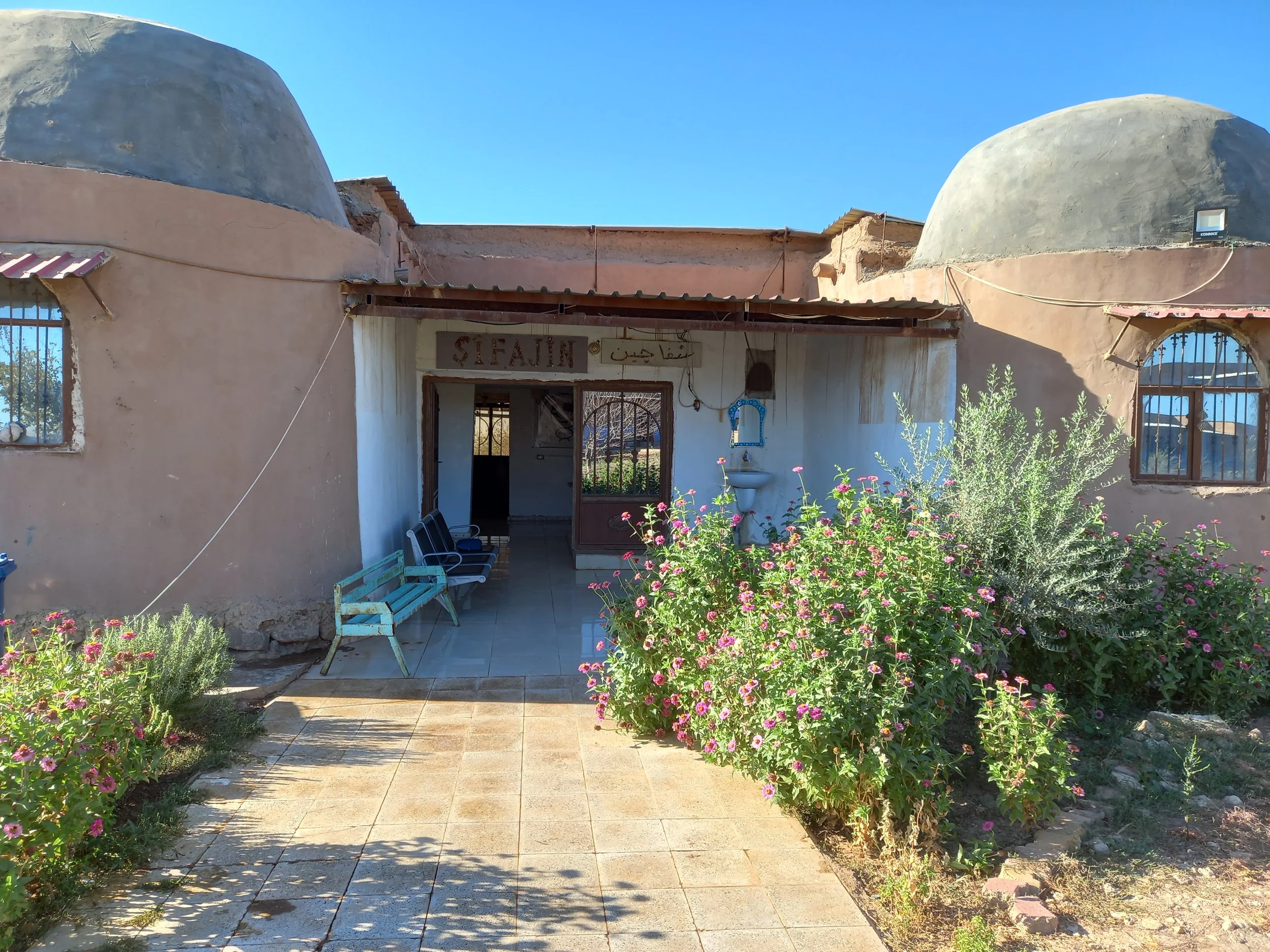
A doorway in Jinwar reads ‘şîfajin’ - şîfa = healing jin = woman. Photo/Jinwar
Building From Within
Rooted in the principles of self-sustainability, Jinwar has established several institutions that meet daily needs through collective effort and self-management. At the Jinwar Academy, they deepen their knowledge of history, economics, and the arts, while mastering principled self-defence to safeguard themselves against the systemic violence of the patriarchy. Guided by the principles of Jineolojî (‘Science of Women’), they realise the inherent wisdom within them and use it in their daily life. Yasmîn explains that this transformation extends to the next generation: “As we raise our children, we make a point of raising them outside of gender stereotypes.” This intentional upbringing, she notes, “has a direct impact on the children’s lives,” shaping a future free from traditional constraints. At Şifajin, they translate their ecological knowledge into practice, utilising natural healing methods such as medicinal herbs and essential oils to sustain their community's health. Through agriculture and gardening, they achieve true self-sufficiency, nourishing the community with the very plants they have sown and nurtured with their own hands. At Aşnan Bakery, named after the Mesopotamian goddess of grain, they process the wheat they have harvested to produce daily bread for the entire community. These institutions also enable women to contribute to the village economy by selling their goods. “When the need for a sewing workshop arose, we first trained ourselves. Starting with basic sewing, we acquired our machines and have now reached the point where we produce our own clothing,” Yasmin explains. There is something deeply unique about labour that blooms from a sense of community and solidarity among women who share a common purpose. Recognising this, Yasmin adds: “As women invest their labour, the resulting products gain value, not only in material terms, but in spiritual terms as well.”
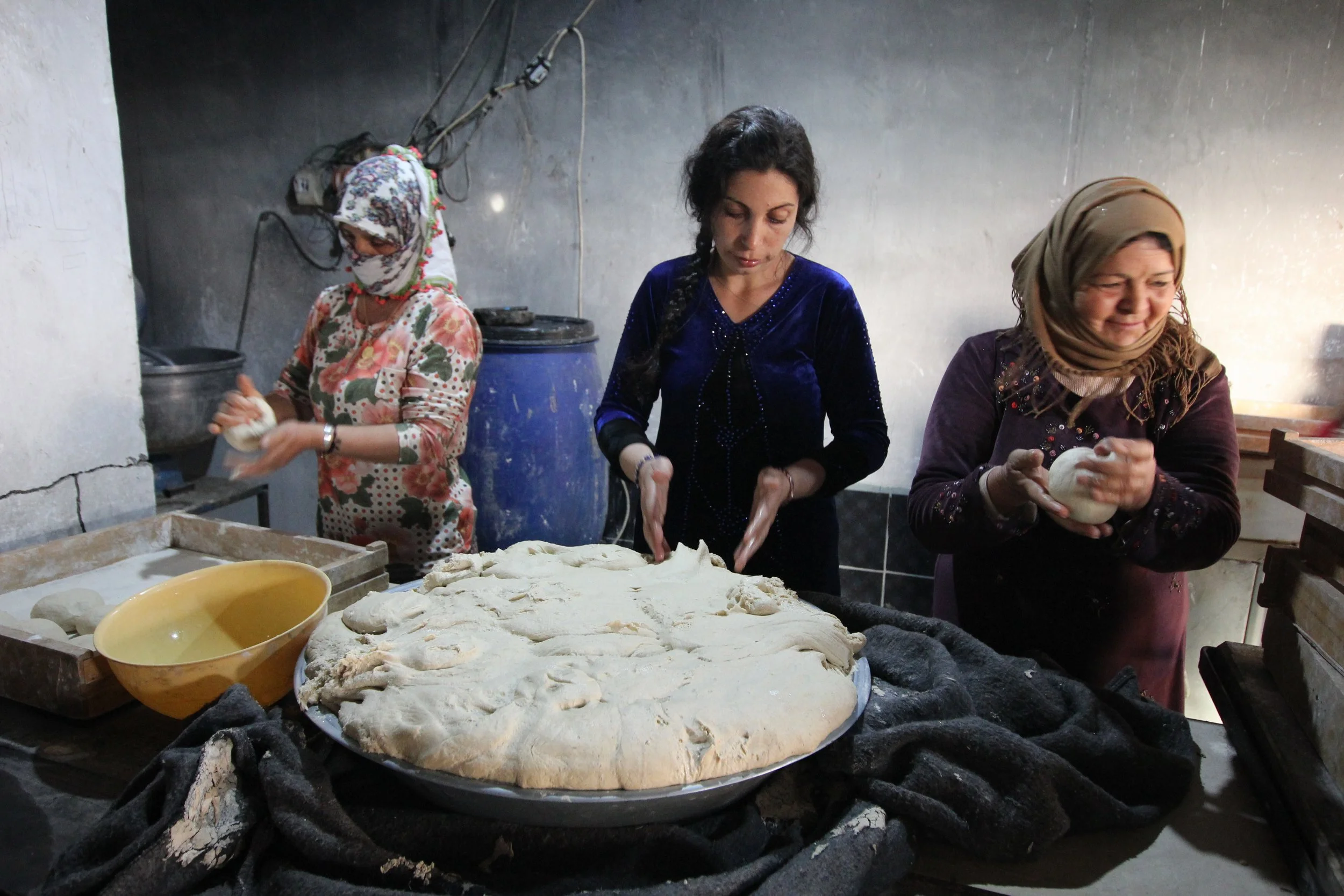
Women of Jinwar prepare bread together. Photo/Jinwar
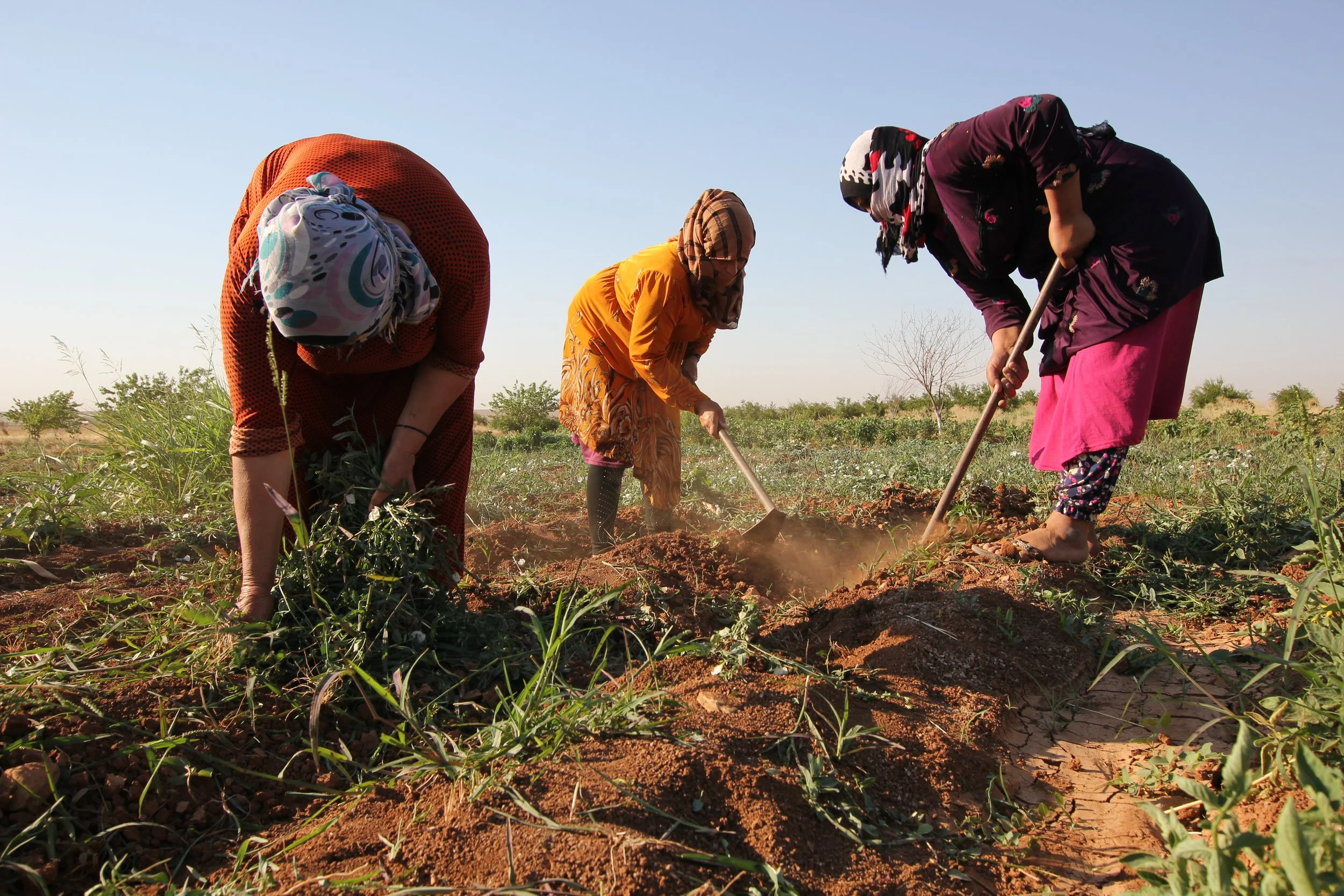
Women preparing the fields for harvest. Photo/Jinwar
An Alternative Life
Contrary to today's women's shelters, where women are often placed in buildings resembling prisons with no systemic change, forced to leave as soon as their “conflict” resolves, Jinwar helps women to recover, re-root, and reclaim. Regarding the women joining Jinwar, Yasmîn responds: “We pay special attention to the women who are new to the village. Most of them have come from difficult and stressful living conditions. For this reason, in the initial phase, we focus on their emotional well-being and try to support them.” She stresses that they primarily centre the women and their well-being, adding: “They usually stay here for about a month, and at the end of this period, they make their own decisions. During this time, women who have regained their composure and found strength often choose to become part of this collective life. Once they have gained the strength to stand on their own two feet, they become active participants in life.” Jinwar becomes a place for them to see that another life, a free one, is truly possible.
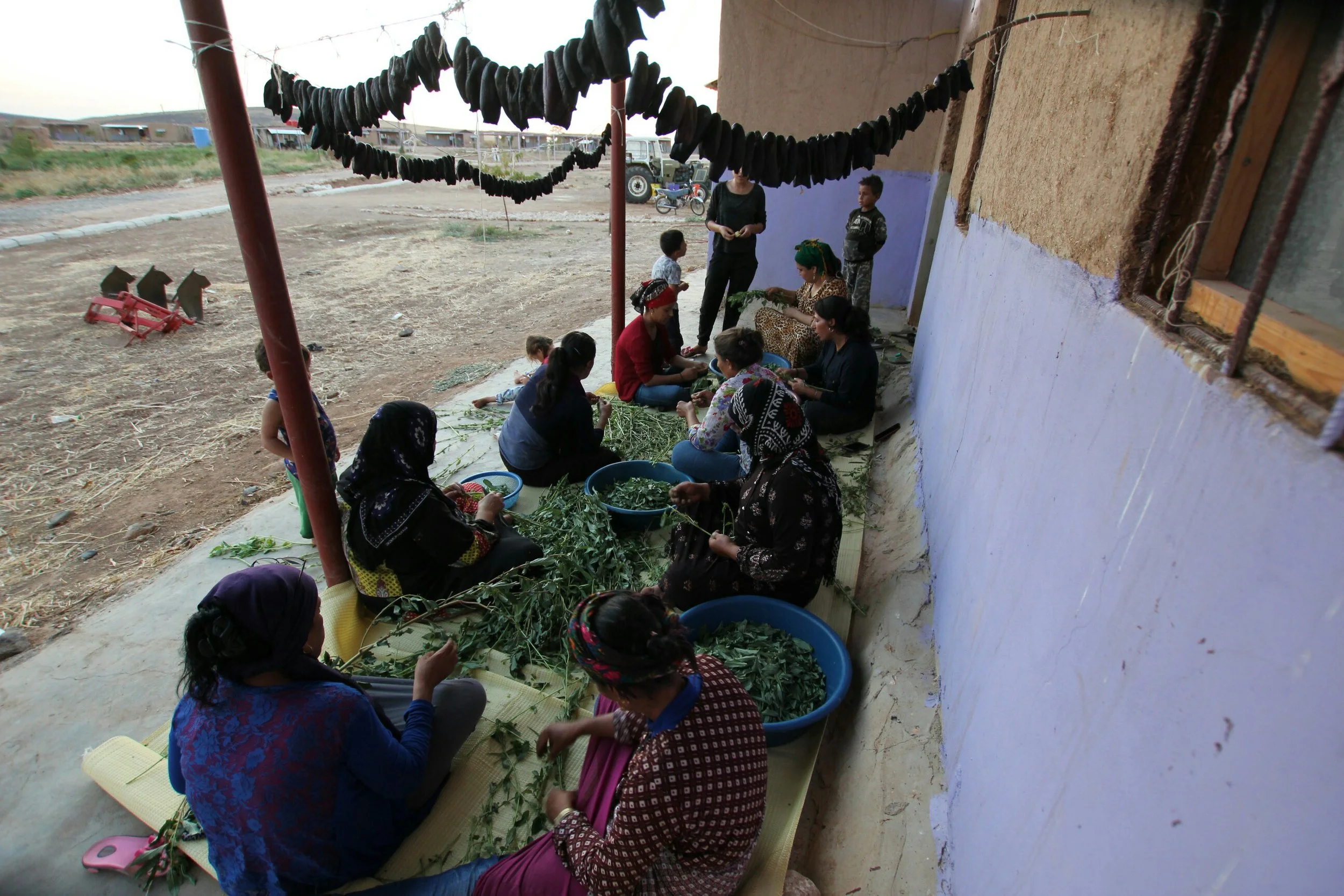
Winter preparations to store food remain a collective effort. Photo/Jinwar
Yasmîn looks toward the future with a firm belief that Jinwar will serve as a guide for others. As she explains: 'This way of life also represents a stance against the patriarchal and state-centric system. Here, we are concretely experiencing that an alternative life is possible. I believe that Jinwar will grow stronger over time and become a universal example.' Central to Yasmîn's vision is the next generation. She notes that the children growing up here offer a glimpse into a new society, with their every action reflecting the traces of a liberated world. 'That is why I can read the future in the children,' she adds.
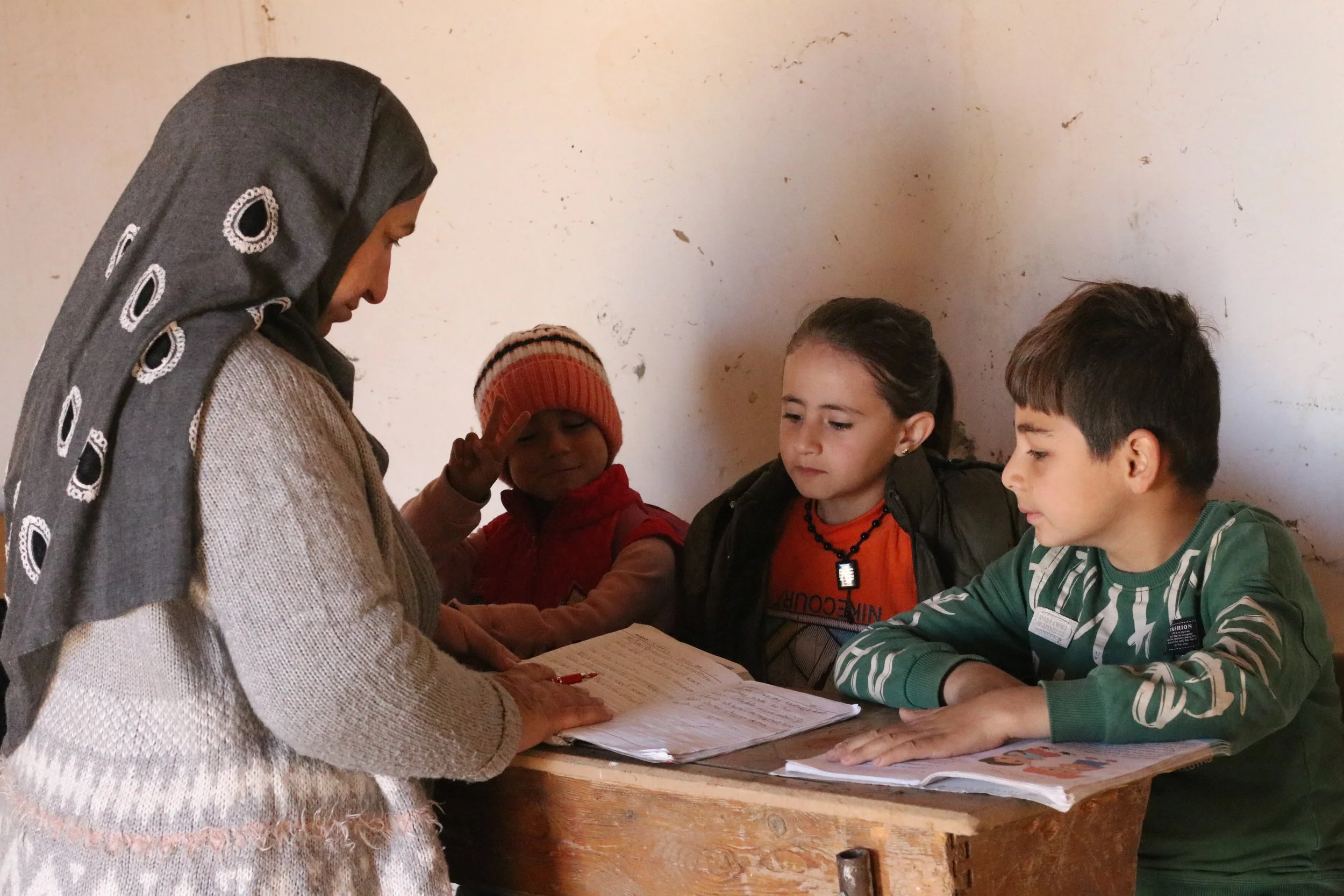
A teacher in Jinwar guides children, returning knowledge to life itself. Photo/Jinwar
Living Beyond Survival
Certainly, Jinwar offers a new alternative where women are free to choose their own paths. It is not a place of confinement but rather a space where they can experience life, live in community, and raise their independent voices. “The bond I’ve formed with Jinwar runs very deep,” says Yasmîn. “Even if I were to leave here, this bond could never be broken. Because I discovered myself here, I saw my own strength here. This village is not just a place to live for me, but also a form of identity and existence.” Finding her place in daily life and living as her nature intended, she feels a profound sense of responsibility toward her community and the women who have found a home within it. “That is why protecting and defending this place is my responsibility. From its ecology to its children, from its labour to its values, I will defend this way of life to the very end,” she declares. Her commitment is rooted in the belief that the change they have started will outlive the present. As Yasmîn concludes, “Jinwar is not just the name of today for me, but also of the future.”
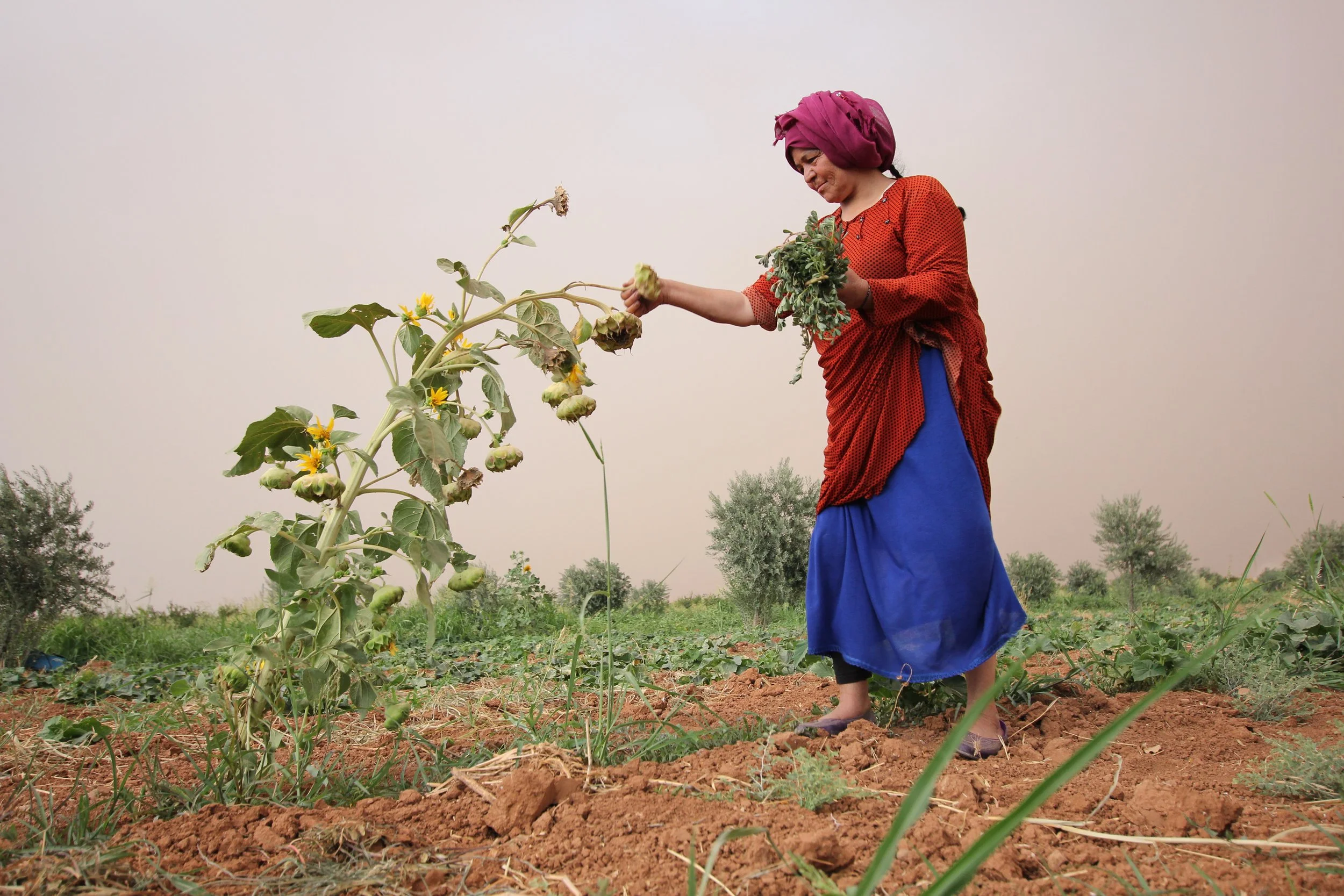
A woman of Jinwar tends to a sunflower plant. Photo/Jinwar
To learn more about Jinwar and how to support their village and community, visit their website: https://jinwar.net/