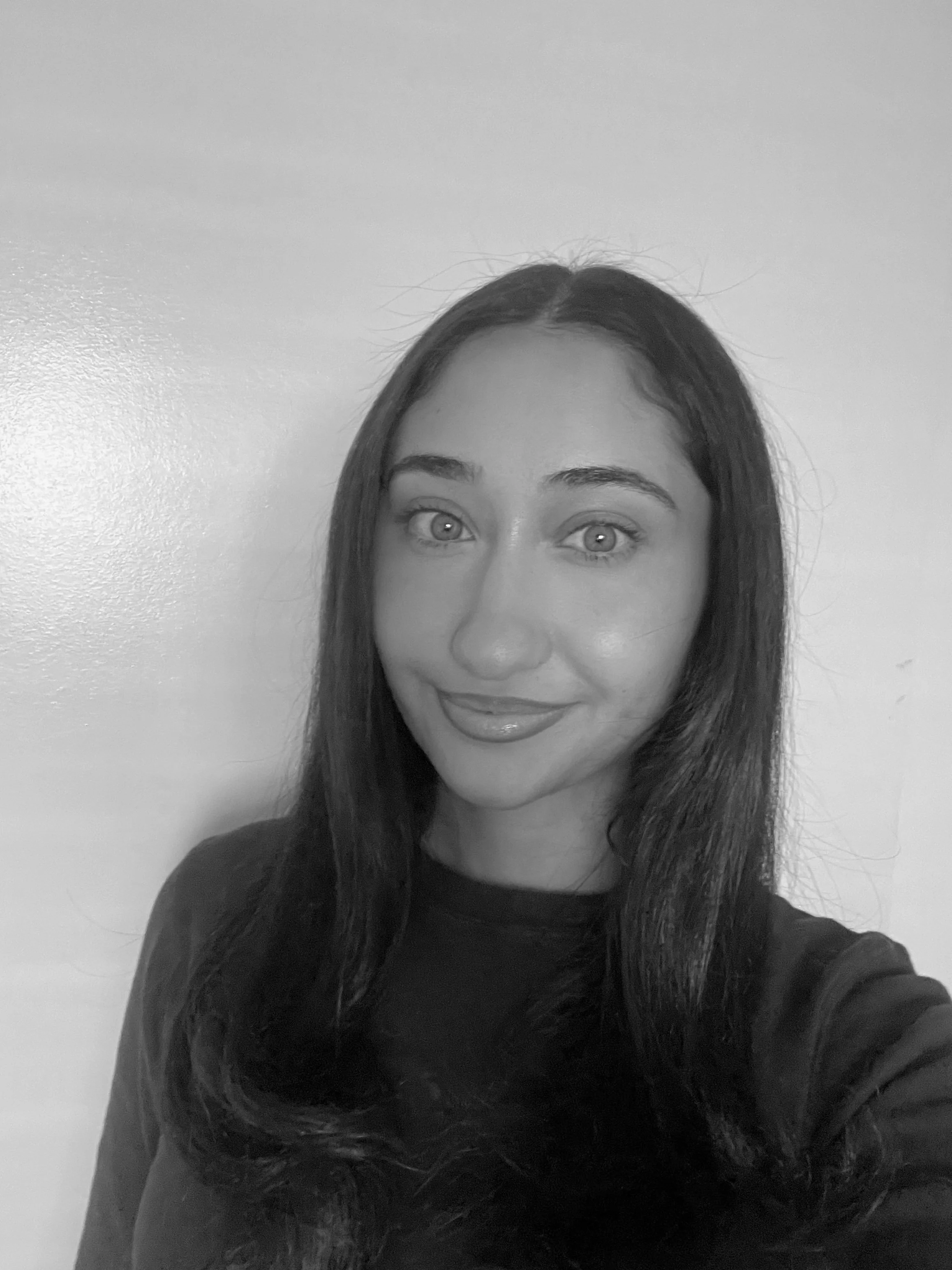
Gulnam Mahmood Mustafa: A Life in the Work of Women’s Liberation (1952 – 2023)

a Professor, activist, polyglot, & founding member of the Kurdish Women’s Union
Gulnam Mahmood Mustafa was a Kurdish professor, activist, and polyglot. Born in Akre in 1952, she was raised among the vast mountains of Kurdistan during a period marked by Iraq’s dictatorial governments. From an early age, she lived within overlapping systems of political and patriarchal oppression. Her life came to embody the broader struggle for Kurdish women’s rights, as she committed herself to a lifelong pursuit of justice.
A Childhood Shaped by Conflict
In her early childhood, violent local conflict between Kurdish tribes forced her family to flee their home in Akre and seek refuge in Mosul. This displacement shaped her early understanding of the world, as she witnessed, firsthand, the layered struggles of her people.
Her family was also deeply immersed in the Kurdish struggle. From 1973 to 1975, almost all of her family members joined the Peshmerga forces, defending civilians fleeing Kurdish cities toward the Iranian border. She was one of six children: her older sister, Amina; her older brothers, Mustafa and Farouk; and her younger brothers, Ali and Sabah. Resistance was not distant in her life; it lived within her own family.
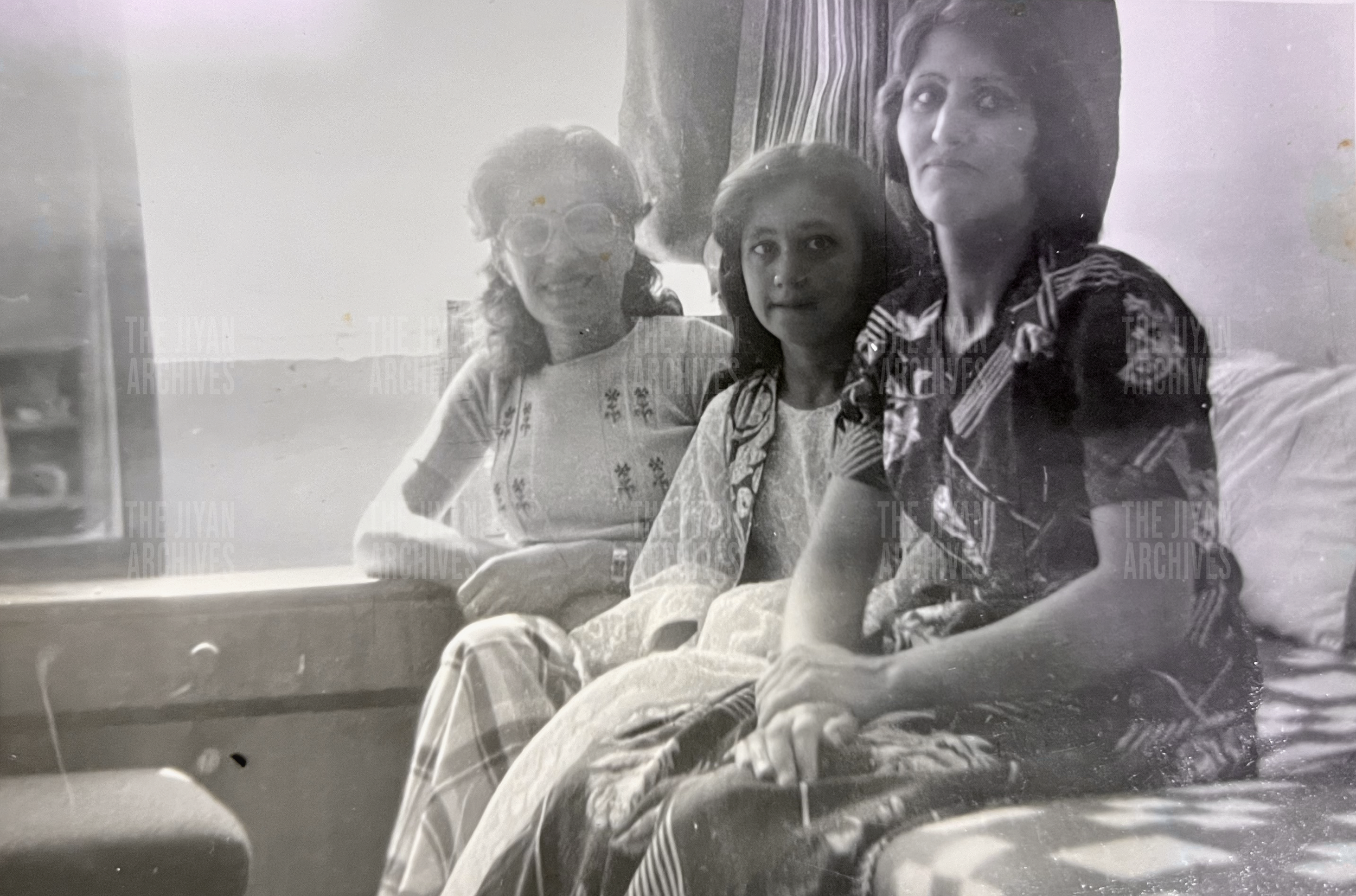
Gulnam (left) photographed with her family in Ramadi, Iraq, 1978. © Gulnam Mahmood Mustafa/The Jiyan Archives
Student Years and the Formation of the Kurdish Women’s Student Union
Gulnam’s activism began in the early 1970s in Mosul, Iraq. In her early twenties, she travelled across the border regions between South and East Kurdistan and Iran, aiding families escaping the atrocities of the Iraqi Army. At the same time, she was attending the University of Mosul, where she, her sister Amina, and a group of friends - among them Runak Majeed, Khalida Khalid, Adiba, Samira, and Marbra - founded the Kurdish Women’s Student Union in 1971. The union was not the first of its kind, but it became a vital extension of a growing movement. At a time when women were made to feel invisible, the student women’s union and Gulnam’s work within it challenged deeply rooted societal norms.
The union stood for a woman’s right to her own body, her own mind, and her own future. This meant addressing the neglect women faced in society. It meant demanding equal pay, healthcare, and access to education. It meant insisting that women belong in political spaces and not be shut out from them. It meant acknowledging that mental health was a product of this layered oppression. The union recognised that poverty, violence, and the silencing of women were not separate misfortunes; they were related weapons that required a connected fight to deconstruct them. The union declared that the freedom of Kurdistan also relied on the freedom of women because to liberate a nation, you must first change the condition of its women.
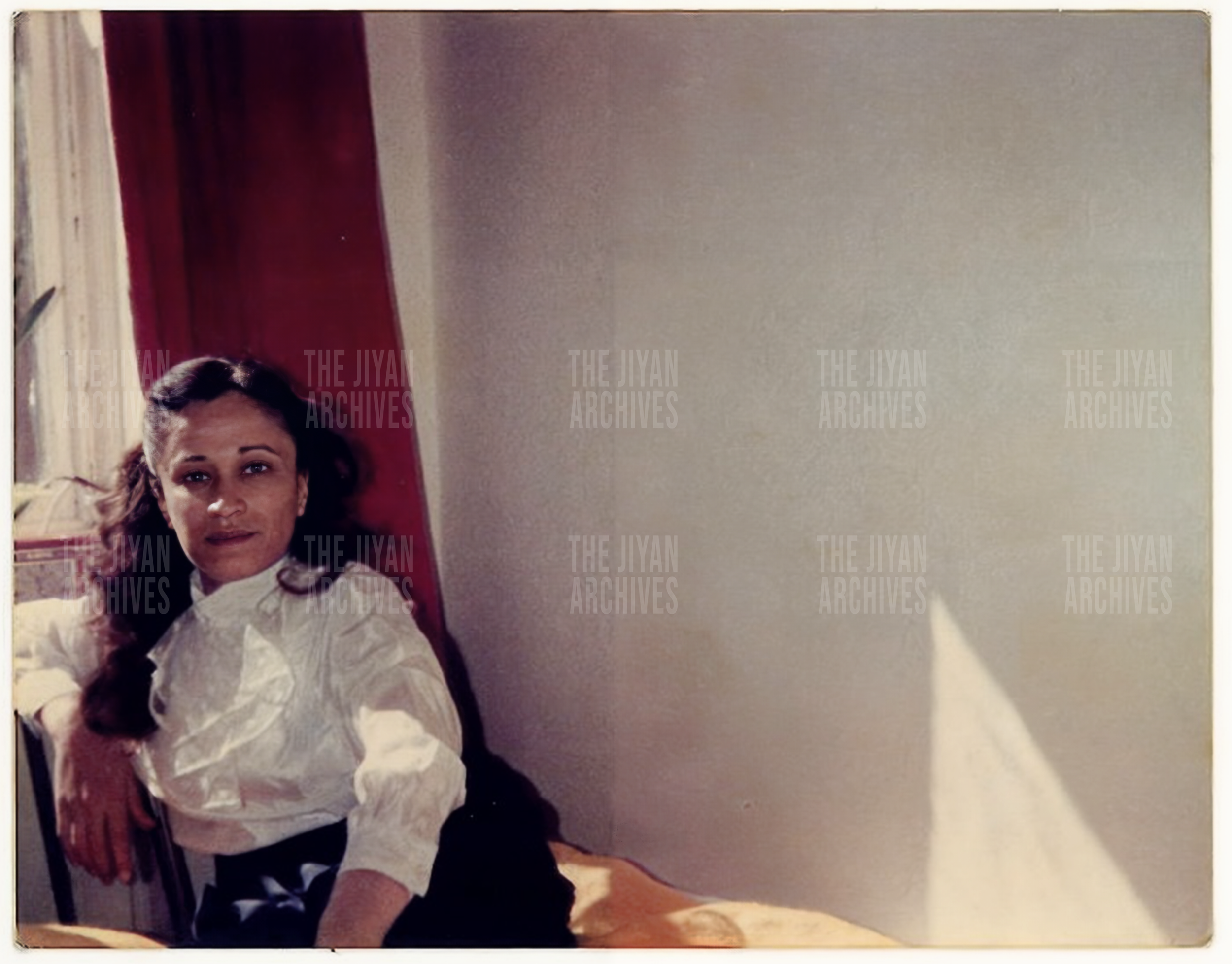
Gulnam Mahmood Mustafa photographed in her home, in Tal Afar, Iraq, in the 1970s. © Gulnam Mahmood Mustafa/The Jiyan Archives
From the beginning, Gulnam’s work was guided by an understanding that liberation couldn’t be achieved through political change alone. It required dismantling the social, economic, and bodily constraints imposed on women in Kurdistan and Iraq. Her activism was not separate from the union's mission; having witnessed the consequences of forced marriage in her community, she confronted the silence surrounding gender-based violence, supported women seeking protection, challenged systemic neglect in healthcare, and opposed the denial of reproductive autonomy. She also challenged the exclusion of women from education and political life. Gulnam knew the cost of that exclusion firsthand. In the very schools where she taught, she saw Kurdish girls lose their right to learn because of their ethnicity, while her own labour was undervalued, paid less than that of her male colleagues. It was through the union that Gulnam organised protests that broke public silence, delivered speeches that exposed these injustices, and travelled relentlessly across Southern Kurdistan and Iraq to establish new chapters of the union.
The work of the Kurdish Women’s Student Union, established in 1971, developed in close alignment with the earlier Kurdistan Women’s Union, founded in 1952. Gulnam Mahmood Mustafa worked particularly closely with a powerhouse figure, Zakia Ismail Hakki (1939 - 2021), the founder of the Kurdistan Women’s Union and its president until 1975, a former Iraqi lawmaker, and the first woman to serve as a judge in Iraq. Their collaboration reflected the continuity between generations of Kurdish women’s organising across Southern Kurdistan and Iraq.
Exile and Adaptation
As a teacher and a polyglot, Gulnam used language as a tool for solidarity. She spoke fluent Kurdish, Arabic, and English, and later learned Turkish and Dutch during her years of movement and exile. In 1976, following the Algiers Agreement and the collapse of the Kurdish movement, the Ba’athist regime under Saddam Hussein exiled Gulnam and her older brothers, all of whom were teachers, deeming them “dangerous assets” for their roles as public intellectuals. She was sent to Tal Afar, far from her brothers, who were exiled separately to Ramadi.
The removal of Gulnam, one of the main founders and central organisers within the union, during a time of heavy state repression and slow decline in union activity, forced the Kurdish Women’s Union to disband for the safety of its members. Any continued activity would have drawn immediate and severe retaliation from the Ba’athist state.
Despite exile and separation from her family, Gulnam remained steadfast in her commitment to collective struggle. In Tal Afar, she lived in a house with other teachers who worked at the same school where she was placed. Gulnam was described as an outgoing woman and a ray of light, making it easy for her to connect with the others, and she quickly established a community. She attempted to restart the union here, not knowing if she would ever return to Mosul, yet the attempt was almost impossible. Under heavy surveillance by the regime and at constant risk of execution for any perceived opposition, she had to move quietly and speak carefully.
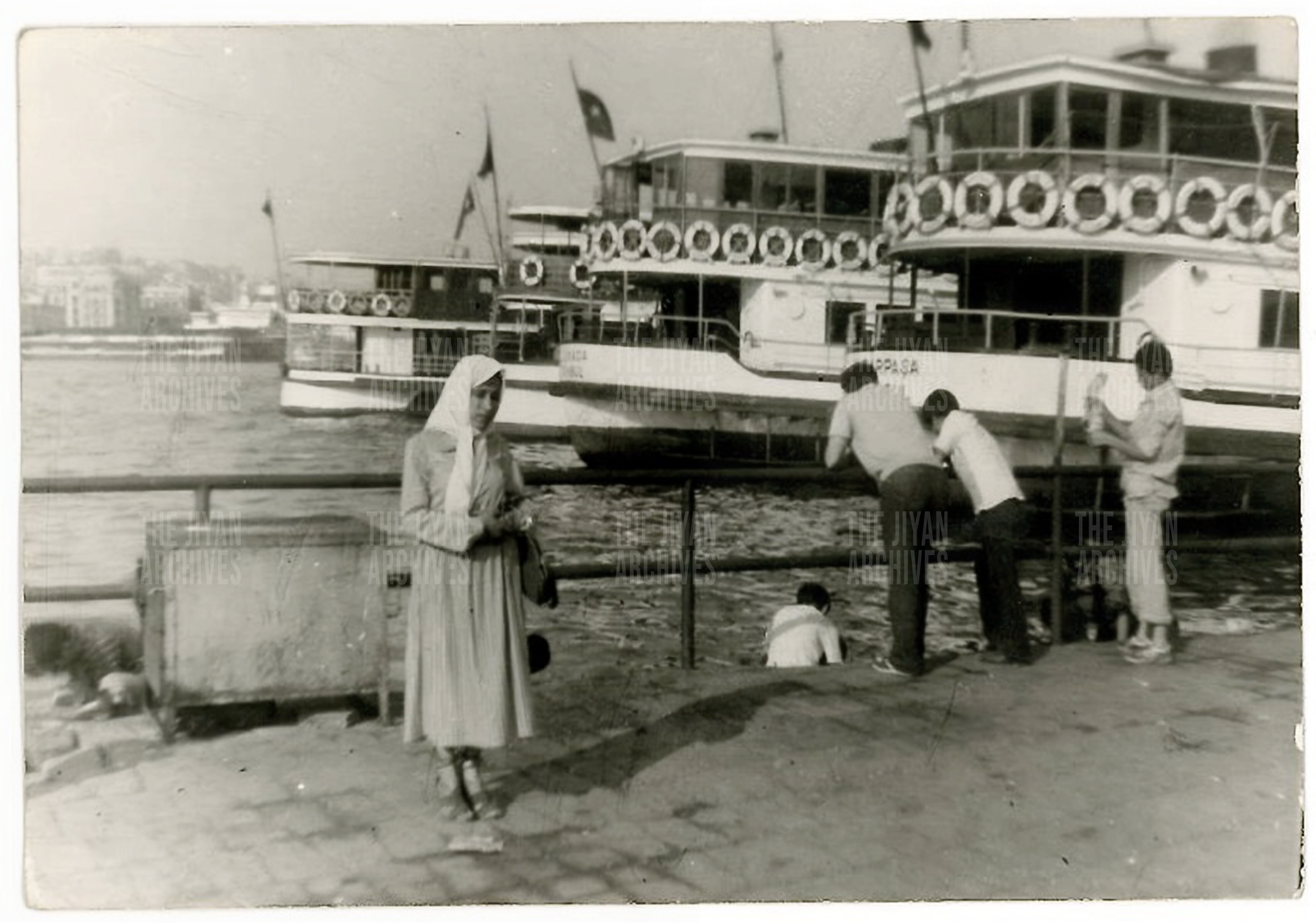
Gulnam Mahmood Sightseeing along the waterfront in Eminönü, Istanbul, in the late 1980's. © Gulnam Mahmood Mustafa/The Jiyan Archives
However, her friendships in Tal Afar opened new doors for her advocacy. Through the network of kind teachers, she learned Turkish and also made connections across the border. In a more subdued manner, she began taking trips to Turkey and Bakurê, travelling to different villages and towns to speak with, educate, and encourage women to start their own chapters of the union. In doing so, she adapted her activism and helped spread the union’s reach.
Return and Reconstruction of the Women’s Union
In the 1990s, there was a systemic collapse of Saddam Hussein’s regime within the Kurdish region, and while his rule continued over the rest of Iraq, Gulnam managed to play a major role in rebuilding the Women’s Union and expanding its reach.
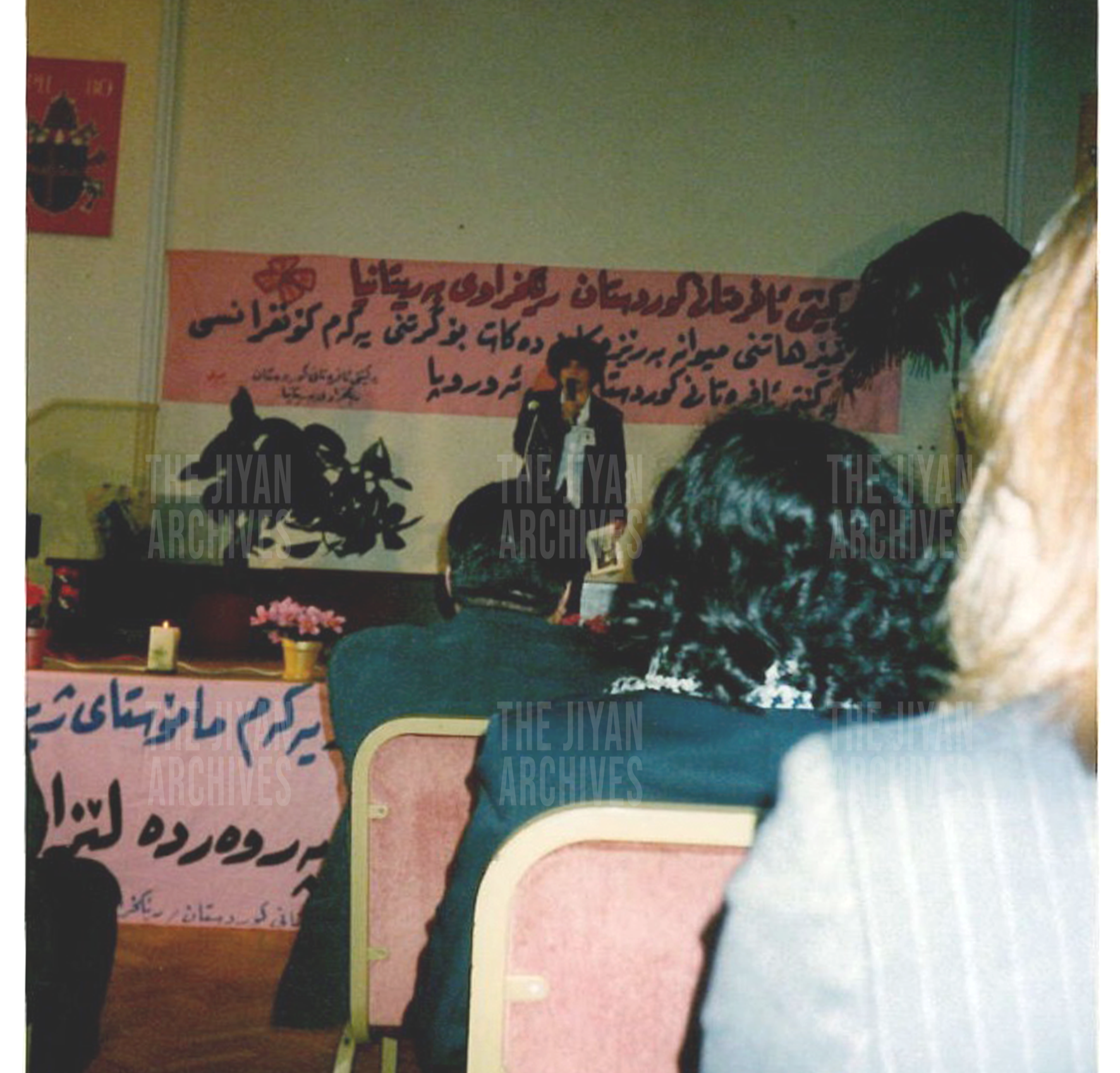
A Speech at the First Kurdish Women's Union Conference in London, 1996.© Gulnam Mahmood Mustafa/The Jiyan Archives
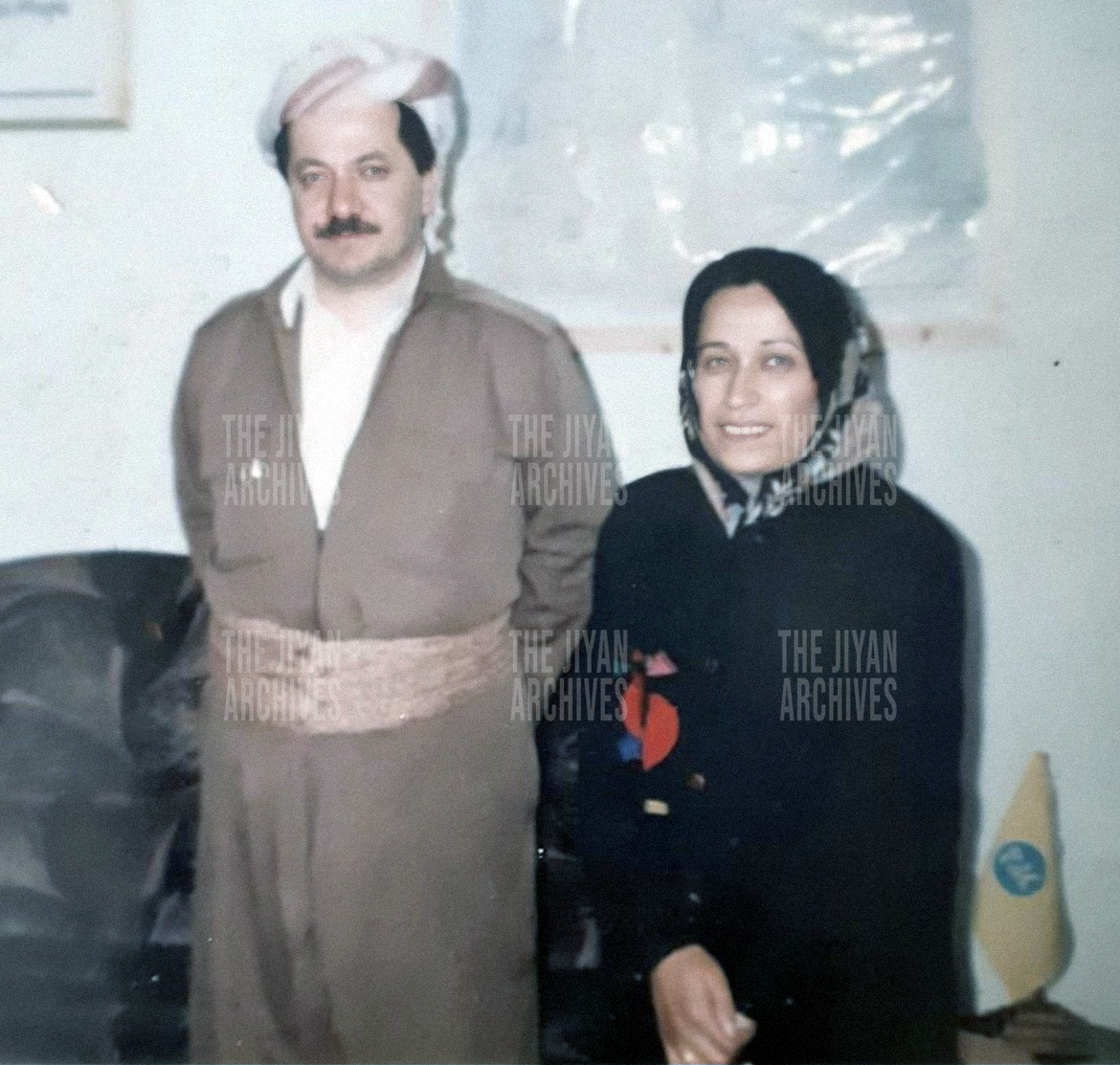
Gulnam with former President, Masoud Barzani, during a visit to the headquarters of the Kurdish Women's Union in Erbil, Kurdistan, 1993. © Gulnam Mahmood Mustafa/The Jiyan Archives
Once Gulnam returned to the liberated areas, the Kurdish authorities asked her to help re-establish the union. She worked closely with her friends and with the General Secretary of the Kurdish Democratic Party, Fazil Mirani. During the first election in the Kurdish region (1991-1992), she began travelling to villages and towns, speaking with women to ensure they understood and exercised their right to vote. She also began establishing women’s support centres across cities and villages in Kurdistan and Iraq, providing direct aid and advocacy to Arab, Yezidi, Assyrian, and Turkmen women, extending the union's solidarity beyond ethnic lines.
Work Across Borders and Diaspora Engagement
In 1994, Gulnam travelled to Holland for medical surgery and was in too much of a sensitive condition to travel back to Kurdistan, thus she was offered political asylum in Holland. She made the best of the situation by contacting multiple non-governmental organisations in Europe, asking them to support the rights of Kurdish women and children. Her outreach introduced new opportunities for both the union and herself. In 1995, she was invited to speak on behalf of the union in London. Her words moved the room so deeply that when she finished speaking, the audience rose to their feet in a standing ovation. The power of Gulnam’s words echoed beyond the walls of that conference room in London and into many more spaces across Holland, Denmark, and Germany for the remainder of the 90s and into the early 2000’s. She connected with Kurdish diaspora communities across Europe, lectured on Kurdish feminist history, spoke about human rights at many women’s conferences, and created links between displaced communities, weaving a continuous thread of memory and solidarity across borders.
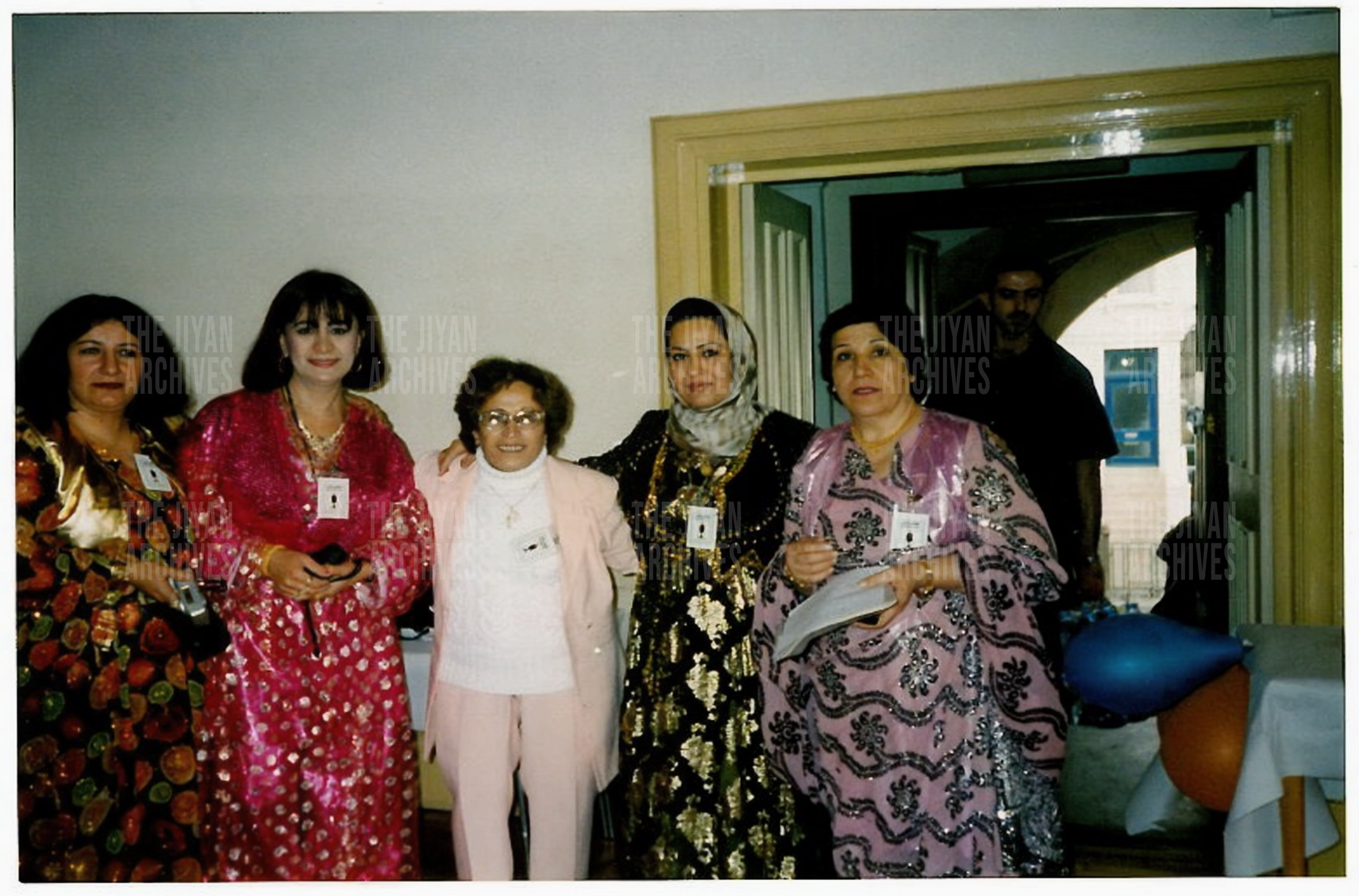
Gulnam, with fellow members of the Kurdish Women’s Union, gathered at the organisation’s first conference in London, 1996. © Gulnam Mahmood Mustafa/The Jiyan Archives
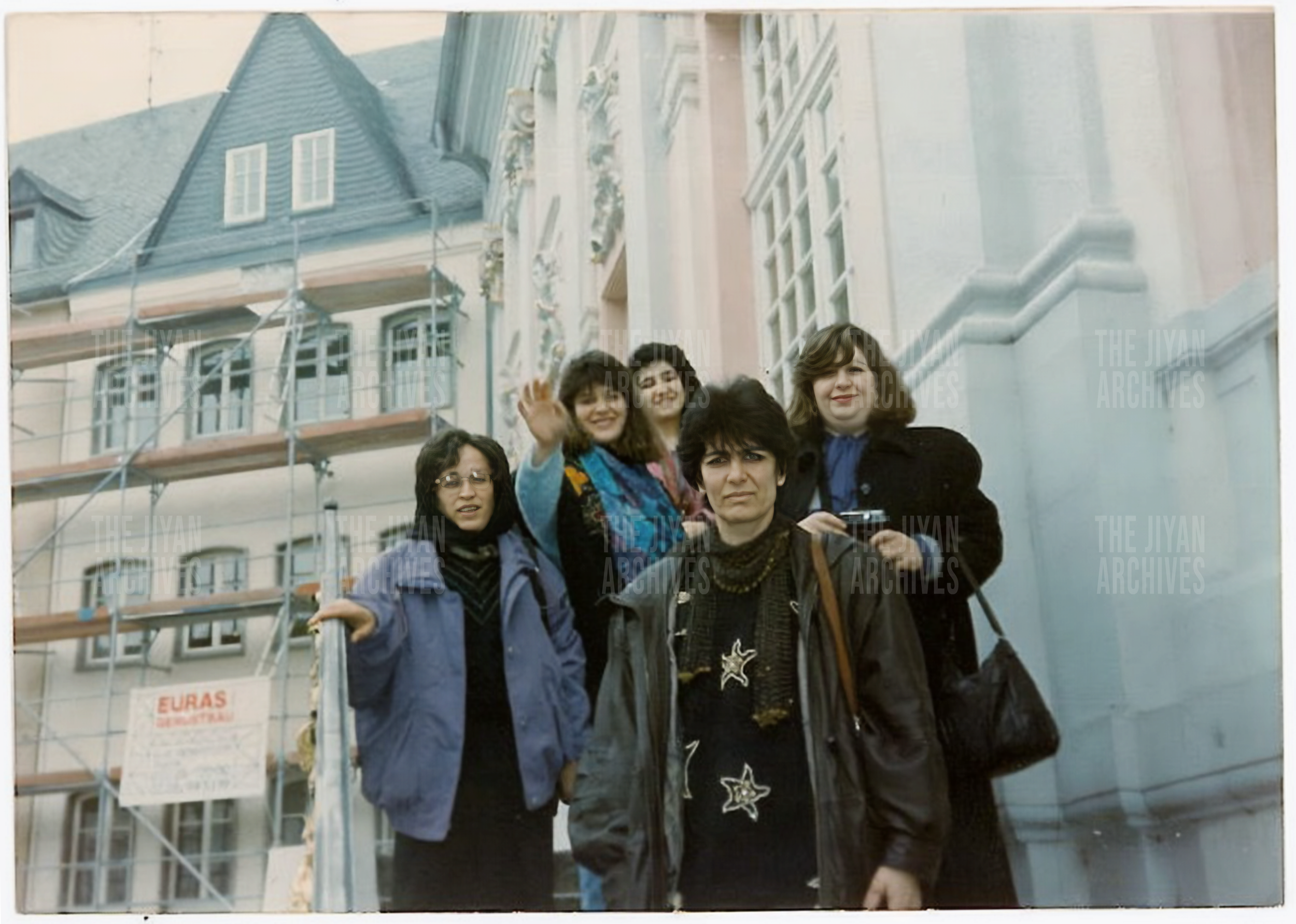
Gulnam, with members of the Kurdish Women’s Union, gathered outside a building in Bonn during their visit to Germany in the 1990s. © Gulnam Mahmood Mustafa/The Jiyan Archives
In 2009, Gulnam travelled to Copenhagen to represent the Kurdish Women’s Union at the United Nations Climate Change Conference. She brought forward a perspective rarely acknowledged on a global stage, articulating how climate change intensifies the realities of war, displacement, and systemic neglect faced by Kurdish women.
Building What Lasts
Her most enduring legacy is the constitution she authored for the Women’s Union of Kurdistan. A living document that formalised the fight against the injustices she had long confronted. This constitution remains valid and actively workable today in the southern region of Kurdistan.
By fixing the Union’s principles in writing, she ensured that women’s representation and collective organisation would no longer depend on fleeting political moments. The constitution created a stable reference point that later organisers and branches could rely on, allowing the Union’s work to expand without having to renegotiate its purpose each time political conditions changed. Over time, that continuity strengthened the Union’s public legitimacy and helped secure a stronger place for women within the civic and political landscape of Kurdistan and, by extension, Iraq.
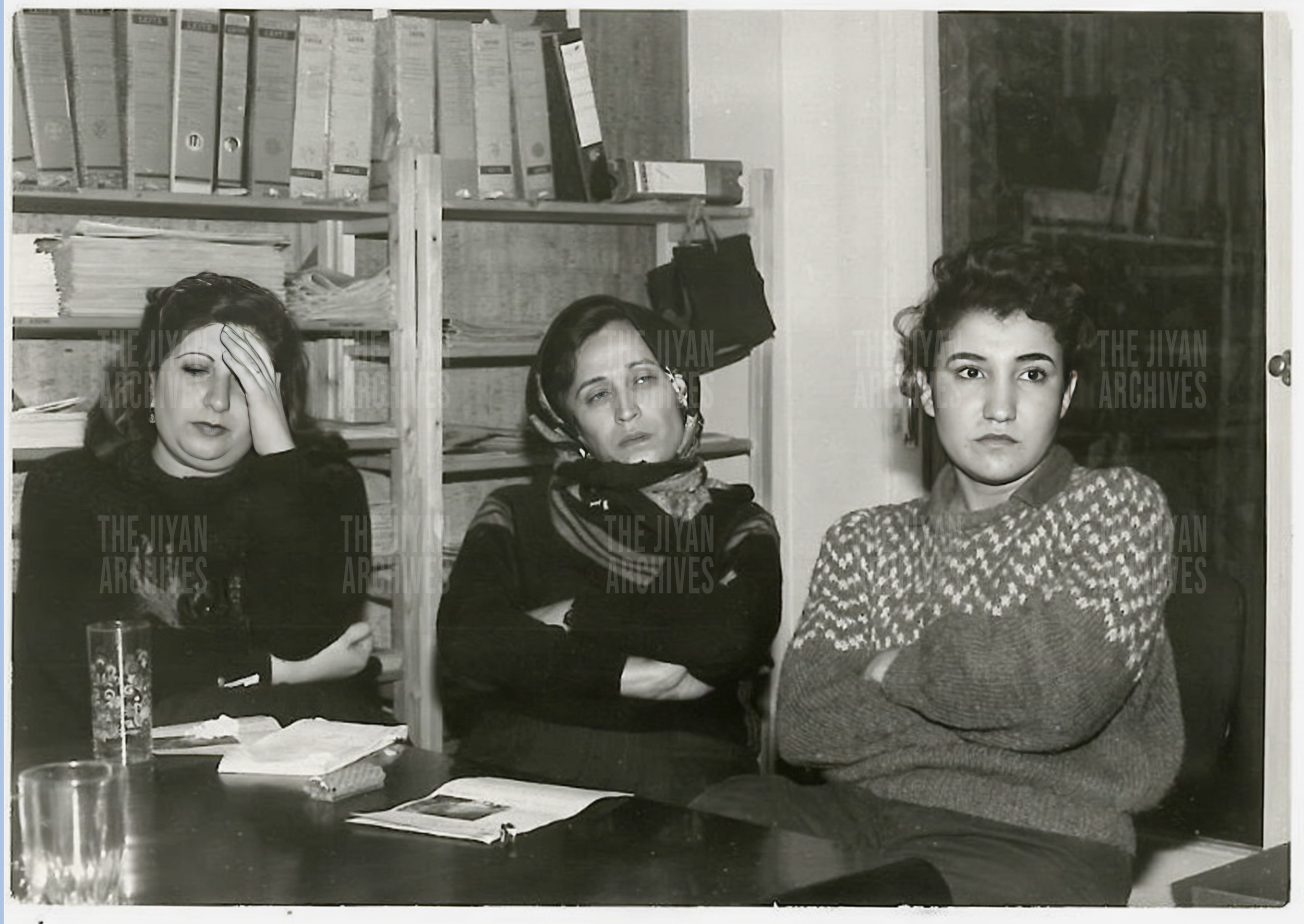
Gulnam in a meeting with the Kurdish Women's Union, a local youth union, and a student chapter of the women’s union at Ludwig Maximilian University, Munich, Germany, 1990s. © Gulnam Mahmood Mustafa/The Jiyan Archives
Final Years and Enduring Legacy
Gulnam Mahmood Mustafa embodied the endurance, courage, discipline, and commitment that define Kurdish women’s resistance. She never married, choosing a different kind of union, a lifelong commitment to collective liberation and the protection of women and children during periods of political violence.
Gulnam visiting her family in Duhok, Kurdistan, 2000. © Gulnam Mahmood Mustafa/The Jiyan Archives
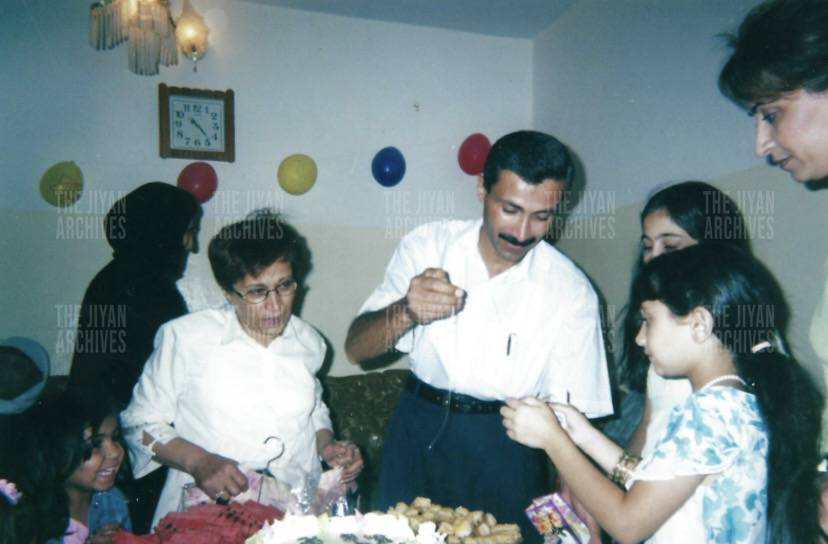
Gulnam with family celebrating her niece's 11th birthday, Duhok, Kurdistan, 2005. © Gulnam Mahmood Mustafa/The Jiyan Archives
In 2015, while she was visiting her brother in Denmark, she suffered a severe stroke. She underwent neurovascular surgery in Odense, which she survived, but left her paralysed. She was able to return to Kurdistan in May 2015, where she lived for eight years before her passing in 2023 due to her deteriorating health. Gulnam left behind a legacy embedded in women's empowerment and cultural preservation. Her life’s work continues to endure through the institutions she helped build and the generations of women who carry her struggle forward.